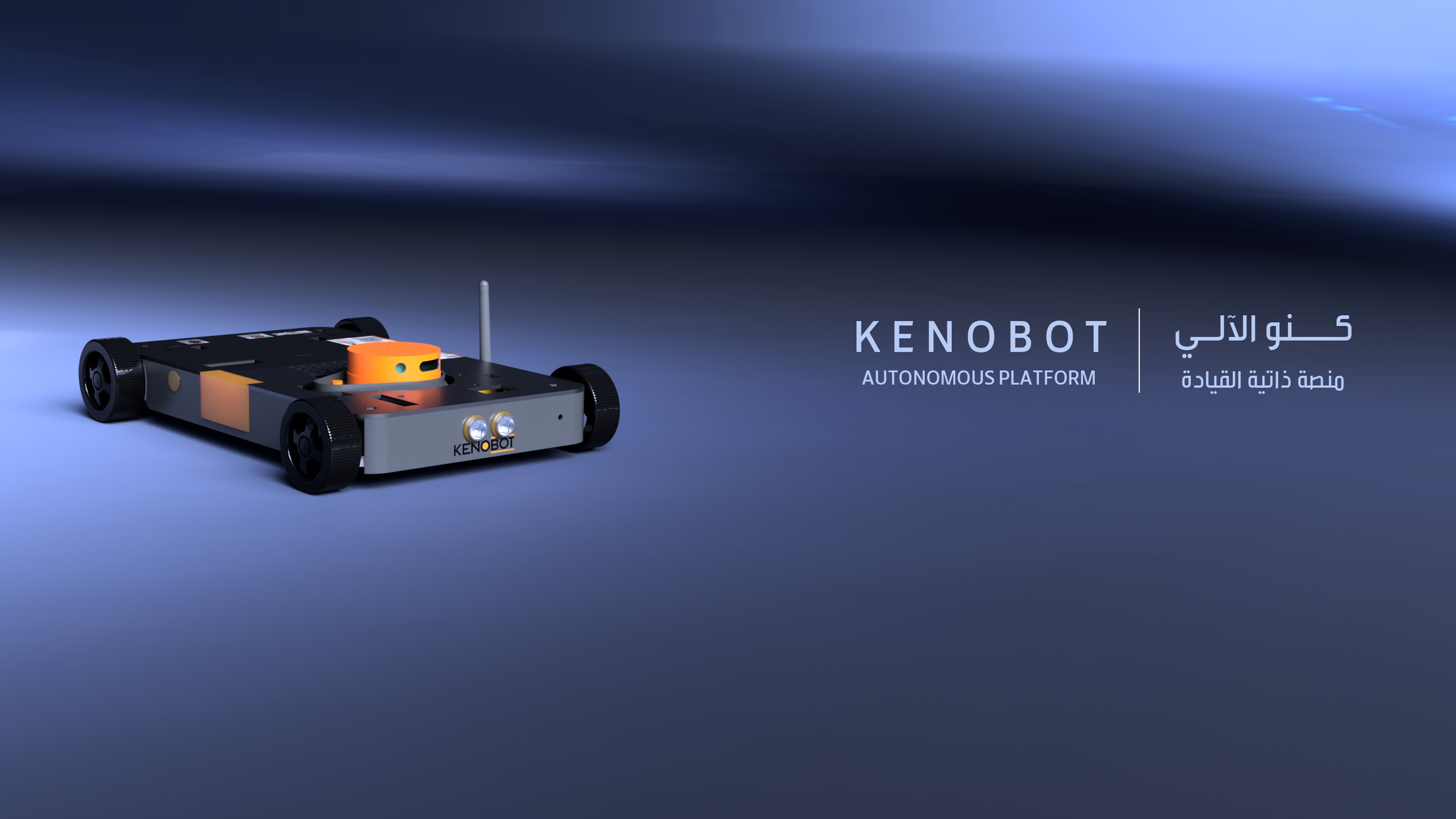
KenoBOT
Mobile robotic platform for education & research
A prototype for testing mobile-robot algorithms
Project overview
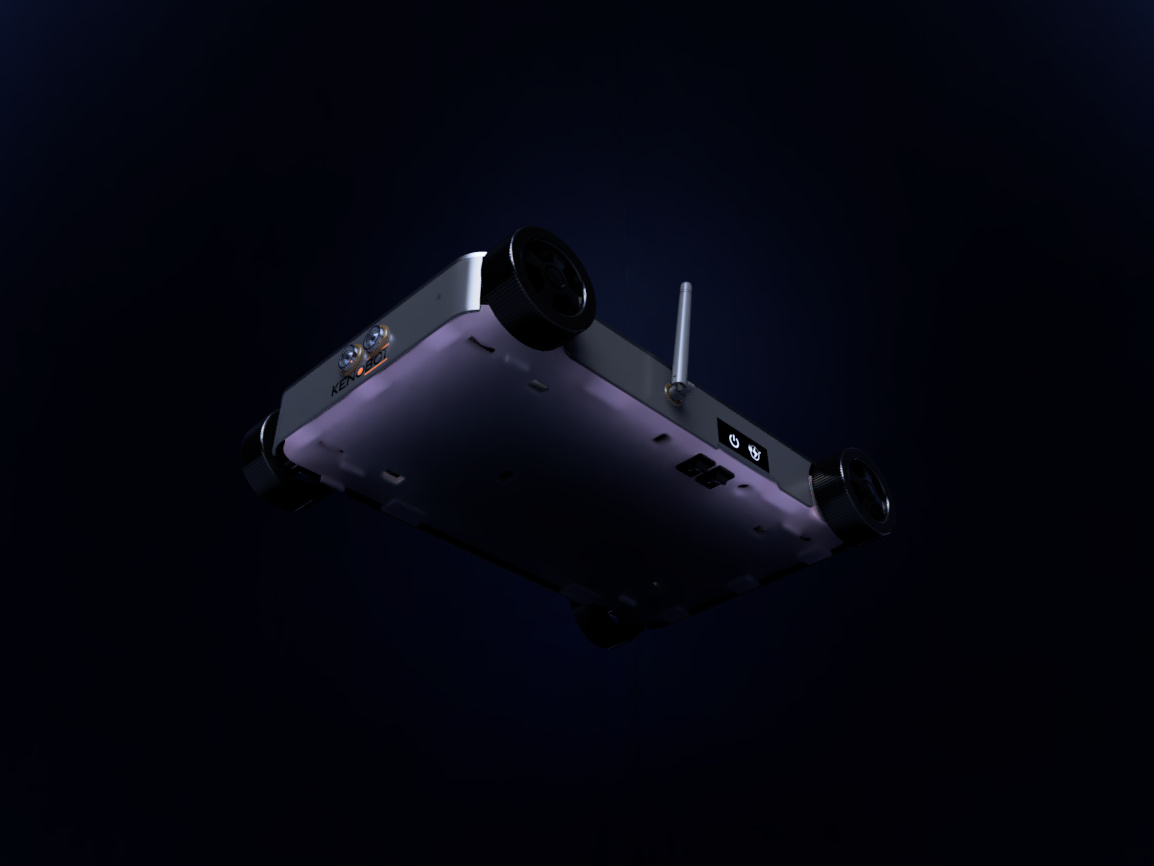
KenoBOT is a prototype mobile robotic platform built for education and research. It gives the lab a hands-on environment for testing navigation, control and mapping algorithms, and for studying how mechanical, electronic and software components integrate into one robotic system.
System architecture
Mechanical & sensing platform
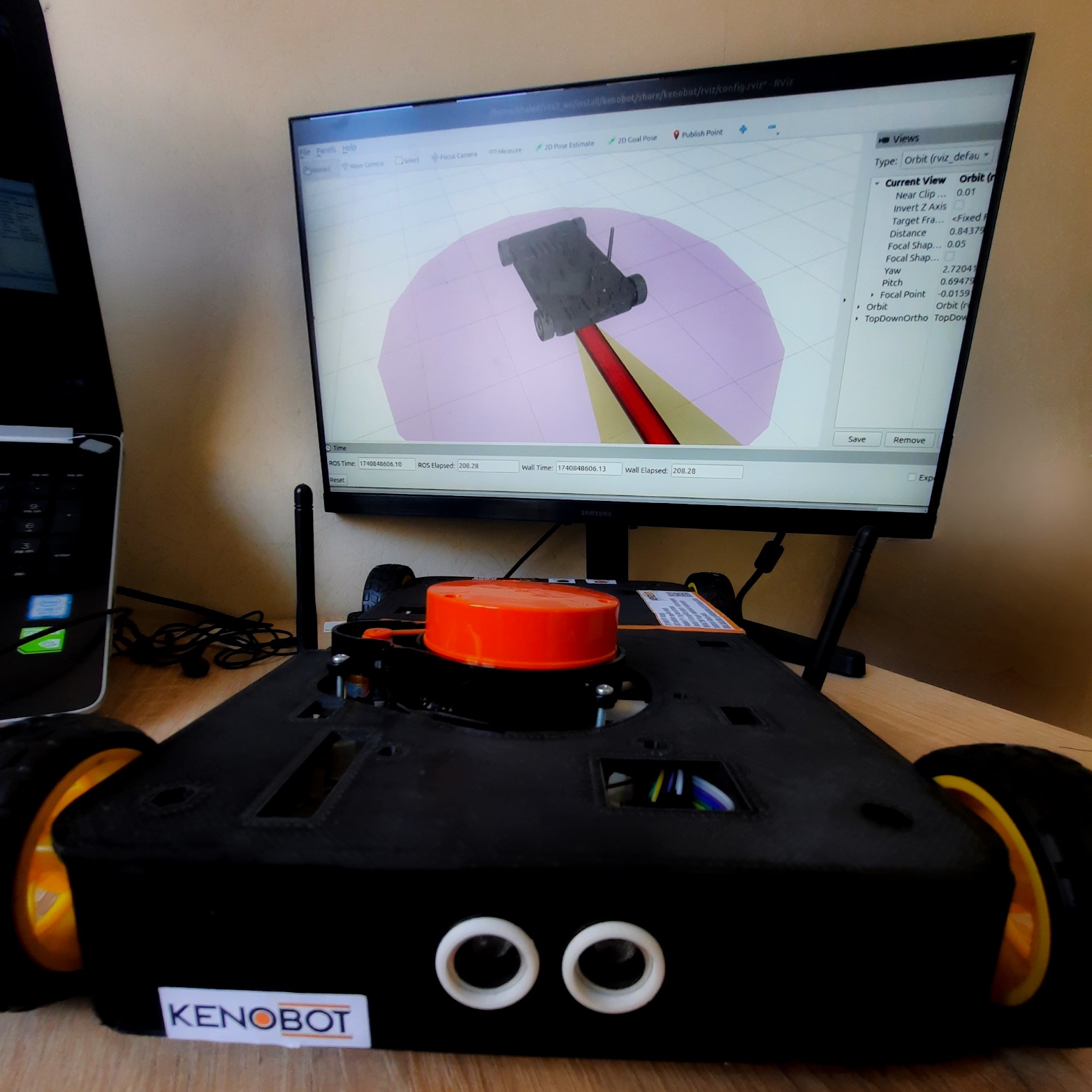
KenoBOT uses a four-wheel drive base and a 3D-printed chassis, with a sensor suite of LiDAR, an IMU and an ultrasonic distance sensor. The platform is built to be experimented on and modified: sensors, drive units and software can each be tested on their own, then integrated into the full system.
Control & communication
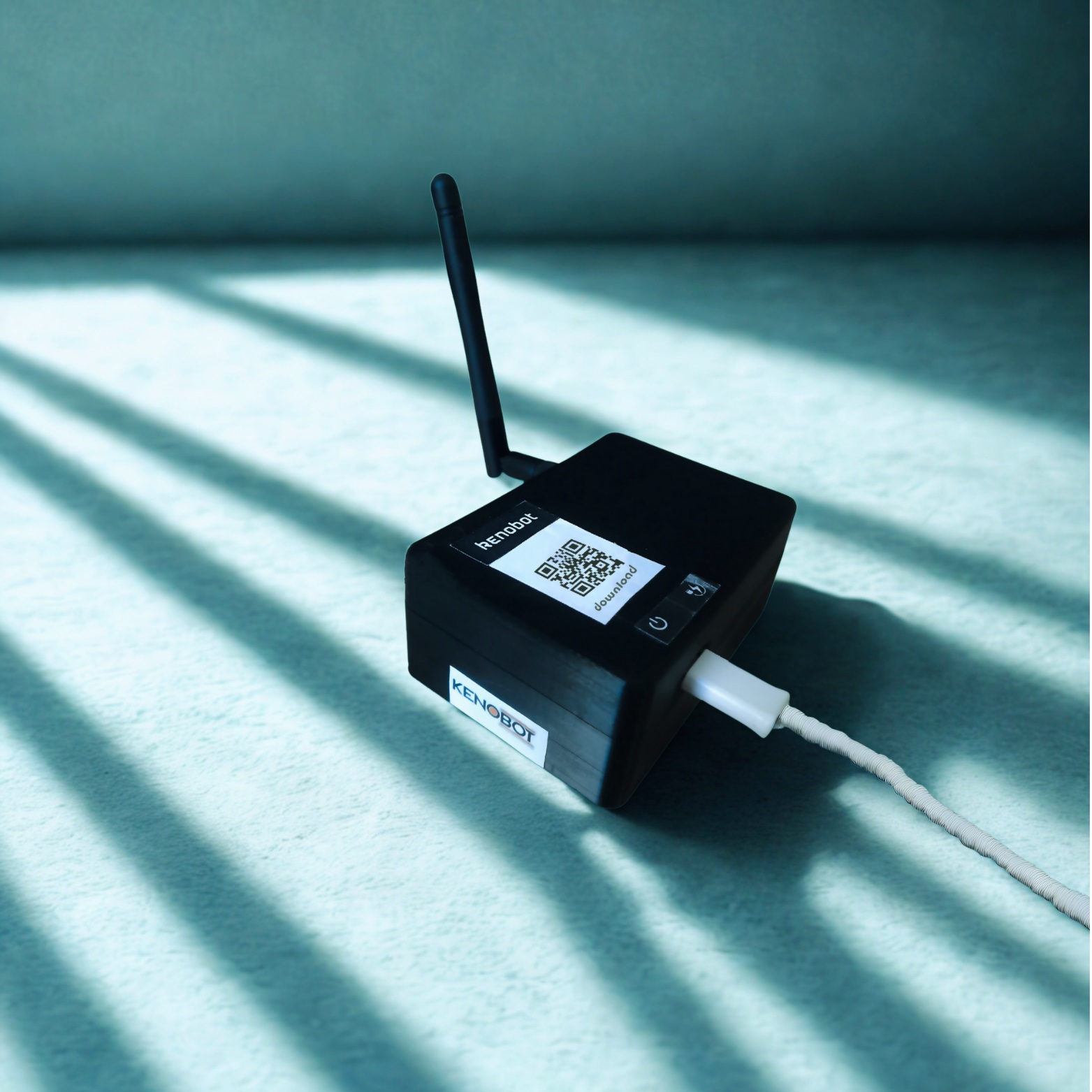
Control runs in two layers: a low-level Arduino layer that executes motion commands and drives the motors, and a high-level Raspberry Pi 5 layer that runs ROS2 and processes sensor data. RF modules provide a wireless link for exchanging data between the platform and the control station during experiments.
The built prototype

KenoBOT has been built as a working prototype with its core components integrated into a single platform. The current phase focuses on an extensible research base for testing control and navigation ideas and collecting sensor data in a lab environment.
The core functions are complete. Ongoing work improves wheel-odometry accuracy, develops the localization layer and tightens LiDAR and IMU integration in RViz. This makes KenoBOT a solid platform for teaching and research experiments, and prepares it for more detailed scientific studies.